
DESPITE THE cold weather, the 48 year old Sarim rushed out of his house carrying a number of jerry cans. The unpleasant air, however, did not stop him from fulfilling his urgent needs. A resident of RT 6 RW 2 Nglampin Village, Ngambon District, Bojonegoro Regency, he had to race against time to avoid long queues to get clean water.
Since early morning, residents had been flocking to a padas well with buckets and jerry cans, who soon formed a long queue. Padas is the source of a depression in a rock on the edge of a river. This remains the main source of water for the residents of Nglampin when clean water is scarce during the dry season because water sources in the area dry up. In order to meet their daily needs, they must be willing to stand in a long queue and share the meagerly available water.
Crop failure due to water scarcity
What occurred to the residents of Bojonegoro back in 2020 immediately reminded me of a 2018 fragment when a social community where I joined distributed dozens of tanks of clean water to five sub-districts in Lamongan, a district adjacent to Bojonegoro. One of the locations we visited was Walang Kopo, a hamlet in Kedungkumpul Village, Sarirejo subdistrict.
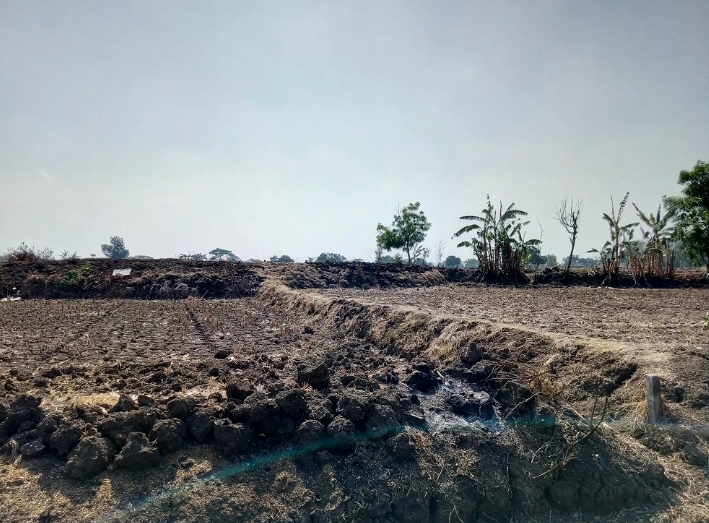
According to Imam, the hamlet head, the clean water shortage that hit their area that year was of extreme severity. The lake, which is the main water supplier, has desiccated. The drilled well also served to no purpose because excavation to a depth of 70-100 meters did not produce even a drop of water. Dug wells are typically reliable thanks to water absorption from plants, but they all seemed to die away.
During the drought, local residents had to look for water in the neighboring village one kilometer away and had to be willing to queue for very long hours and share it with other residents. The saddest thing is of course the crop failure in Walang Kopo as a result of water scarcity. It can be expected this will have a significant impact on economic and health problems.
Spotlighting Green Star Nusantara
It was indeed heartbreaking to see what people of Nglampin and Walang Kopo had experienced. Had local residents anticipated the situation, they would not have had to deal with severe water scarcity. What Samsul Arifin Wijoyosukmo had taken is something worthy of respect and appreciation. Instead of sitting idly or complaining fiercely due to water shortage, he initiated Green Star Nusantara.
Abbreviated as GSN, the community was founded in 2010 and is aimed at encouraging people to care for the environment since our lives cannot be away from nature. With the GSN, this young man from Sumberagung Village, Dander subdistrict, Bojonegoro had learned that many water sources have slowly dried up as a result of massive oil and gas mining activities in the Bojonegoro area since the 2000s. Not only has the mining activities led to dwindling water resources but also terrible air pollution that endanger people living in the vicinity.
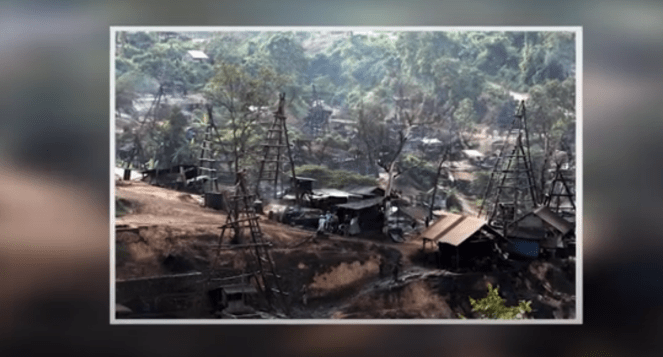
The GSN’s findings reveal that many springs have dried up over time due to a reduction in supporting trees. These trees originally played an important role in storing clean water supplies that could be used when needed.
Samsul pointed out,
“Some supporting trees are already old, rotten, so many have fallen off. Some are cut down by humans.”
Unfortunately, no immediate efforts were taken to restore or replant trees which would have a vital function as an effort to revive the dead springs. The GSN believes that large-scale oil and gas exploitation has had a direct impact on the severity of global warming and greenhouse gases, so collaborative work is inevitable to tackle the critical issue.
Local wisdom: rain trees

Alerted by the terrible situation, Samsul then investigated local treasures as a solution to water and air problems in his area. He asserts that if the problem is left untreated without any real action, then heat will become increasingly rampant, leading to stunted growth of various plants on which we rely as food.
In an interview with the SATU Indonesia Awards team, Samsul remarked seriously, “Ibu Bumi wes maringi, aja dilarani!” The Javanese sentence literally says “The Earth has given us a lot, so avoid hurting it,” this has moved the GSN to see local potentials as a way out and inspiration.
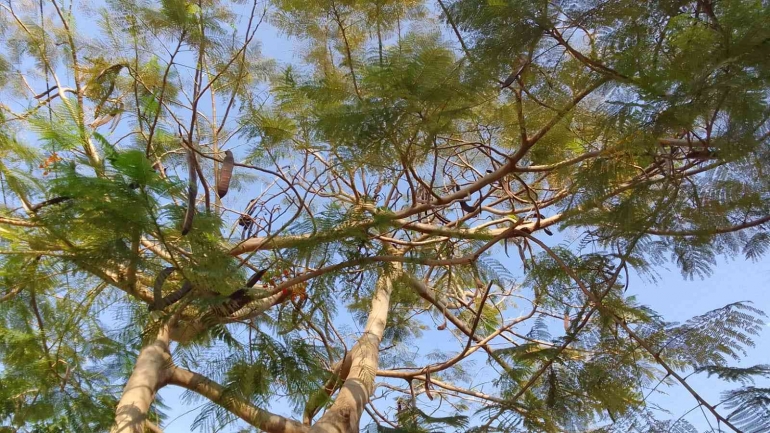
“One of the best plant that can improve oxygen by absorbing CO2 while preserving water resources is rain tree.”
Hardly ever is rain tree considered vital in the context of ecological balance. Rain trees have so far been known as a shade tree from which wood is taken to make household furniture such as cupboards, chairs and tables. I personally have fond memories of the tree. When I was a kid, I often snacked on roasted cashew seeds which were widely sold as in nearby food stalls. It was even more enjoyable when we sipped the edges of the pods that taste sweet and distinctively unique.
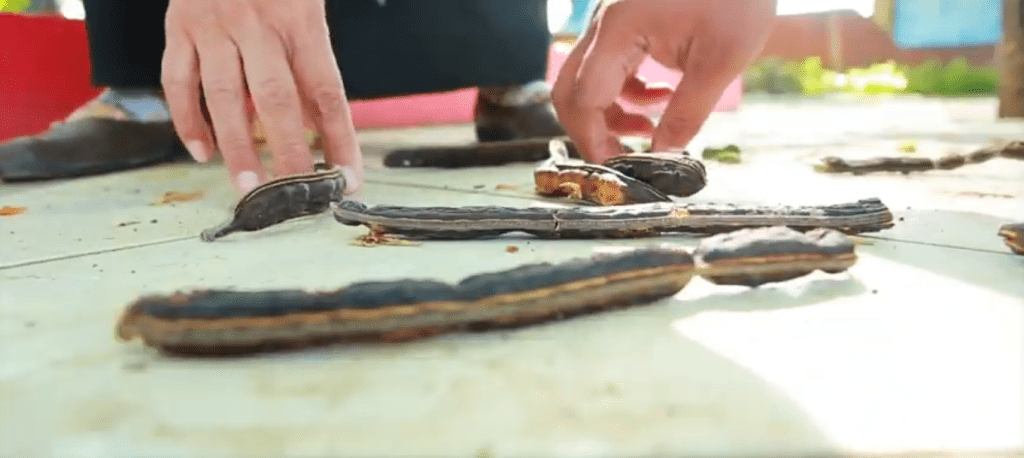
With such huge benefits, the GSN decided to plant rain trees in as many places as needed. The problem at that time was the seeds. They normally collected scattered seeds wherever found but turned out it’s insufficient. As rain tree seeds were not widely available back then, they had to buy them online from West Java. Samsul recalled it was a quite expensive purchase, at that time it amounted to IDR 200 thousand per kilogram including the shipping cost.
Adopting the Samin’s Self-sufficiency

In response to the high price of the seeds offered on the market, the GSN then decided to develop its own seedling to minimize costs. Compared to online purchase, seeding by themselves clearly saves time as well. Once the seeds are ready, planting is then carried out in locations deemed necessary. Alternatively, seeds are also distributed free of charge to those in need, for example communities or villages that need them.
Samsul emphasized that anyone may adopt rain tree seeds without having to submit formal letters or complicated procedures. The GSN made it obvious that those receiving the seeds are required to demonstrate a shared commitment to preserve the environment through collaborative efforts that seem trivial but are actually impactful.
To Samsul, Green Star Nusantara is not just a community, but a system to re-green the world from the threat of global warming. With this in mind, they have high hopes of being able to restore oxygen quality and especially restore sources of clean water reserves which are increasingly scarce.

If the seeds are given away for free, then how is the GSN funding its programs? This is what makes the community uniquely outstanding. Funding does not rely on any parties other than collecting voluntary contributions from members. In addition, the GSN makes money from the sale of powdered herbal medicine made from various rhizomes of their own production. It is clear that the spirit of self-sufficiency has become a precious value in this group.
“The spirit with which we adopt to develop this community belongs to the Samin tribe,” said Samsul in decisiveness.
The Samin who live in Bojonegoro and the hinterland of Blora are known as an indigenous people who hold their traditions firmly. They resemble the Kanekes people or what is known as the Baduy in Banten. When making use of nature, they take only what is necessary without a tendency to manipulate or exploit. The tribe is also well-known for its honesty and humility. Both socially and economically, they do uphold self-sufficiency as well as independence.
With the GSN, Samsul has demonstrated positive initiatives and self-sufficiency to restore clean water sources and quality oxygen due to oil and gas mining and global warming. His hard work finally paid off when he was rewarded with the prestigious SATU Indonesia Awards from PT Astra International, Tbk. It is evident that a seemingly small step has proven to generate a considerable impact on the environment.

Rooted in local treasures, rain tree has been a great choice to tackle depleting water sources and improve oxygen quality where Samsul lives. It is smart to have their own seedling of rain trees to save money and to collect fund from selling their self-produced powdered herbal medicine without relying on other parties.
That way Samsul and his team are not only caring for the environment but have chosen to build awareness about sustainable life in a productive cycle. Owing to the rain trees, quality oxygen and water reserves come to be possible. When water is abundant, normal life exists. More to the point, preference over rhizomes is nothing but brilliant as they grow easily everywhere.
From Samsul we learn that the entire archipelago can stand or fall because of what we do. We can always opt for mindfulness or ignorance, but all we need to remember is that we do need each other to survive. One little step of compassion can certainly change everything—especially when we work in tandem with others. Just like the GSN, we have to ally in determination towards the making of prosperous Indonesia for generations to come.
 blog belalang cerewet