
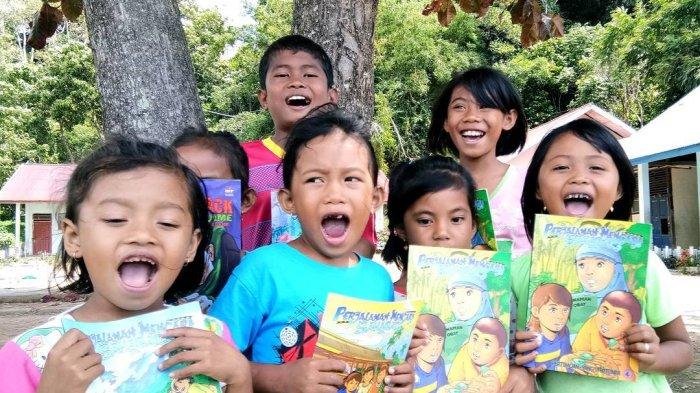
The morning in Poso begins gently. Mist lingers over the green hills, the sound of church bells mingles with the call to prayer, and the town—once a name synonymous with conflict—stirs quietly awake. In a modest library near the market, children gather on woven mats, their small fingers tracing the lines of colorful picture books. Their laughter fills the air, light and unburdened, as volunteers help them sound out new words.
For outsiders, it may look like an ordinary reading activity. But for the people of Poso, this simple act carries deeper meaning. Each story read aloud, each shared smile, is part of a larger journey. It is nothing but a collective healing process that began with a handful of books and a belief that words could rebuild what war had torn apart.
This is the story of Poso BaBaca, a grassroots movement that has transformed literacy into a tool of reconciliation. Born from the ashes of interreligious conflict, Poso BaBaca has become both a library and a bridge, connecting people across faiths, generations, and memories.
Away from the violence cycle
More than two decades ago, Poso was at the heart of one of Indonesia’s most painful communal conflicts. From 1998 to 2001, the region was engulfed in waves of violence between Christian and Muslim communities. Houses were burned, families displaced, and fear became the language everyone understood. Even after the weapons fell silent, the trauma lingered. Children grew up hearing stories of “the others,” of who to trust and who to avoid.

Amid that silence and suspicion, a group of young people began asking a simple but radical question: What if we started talking again? What if children, who had inherited fear they did not choose, could instead inherit understanding?
In 2014, those questions gave birth to Poso BaBaca that literally means “Poso Reads.” It began humbly, with donated books and makeshift shelves in a borrowed room. But its vision was clear: to nurture a reading culture that could open minds, foster empathy, and slowly rebuild the social fabric torn apart by years of mistrust.
“We intend to share knowledge with everyone in Poso through every book we have read and every piece of writing we have created. Our purpose is also to keep the younger generation away from the cycle of violence and the negative effects of modernization,” said Gunawan Primasatya the co-founder as well as spokesperson for the program.”
Books to enrich and to bridge
Established in 13 November 2014 by Gunawan, Mahris Supono, Murthy F. Rone, Husein Noval, and Lugna Hi. Lanna, Poso BaBaca believes that literacy is not just about reading words. It’s about understanding the world. Every week, volunteers organize reading circles that bring together children from different religious backgrounds. They sit side by side, sharing fairy tales, folktales, and even local stories about unity and courage.
In a region once divided by belief, these gatherings are small miracles. Parents who once hesitated to let their children play beyond their neighborhood now exchange greetings and food with families from the “other side.” Slowly, fear gives way to familiarity.
“The books we brought varied, ranging from children’s stories to educational books, and they were placed inside cardboard boxes — which is why Poso BaBaca is often known as the ‘cardboard library,’” said Fahmi, an employee of the Ministry of Finance who has been volunteering with Poso BaBaca since 2016.

Gunawan further explained in an interview with Tribunnews.com on September 6, 2024 that the group did not merely provide books for children to read, but also encouraged them to discuss the values contained in the stories. Volunteers like Fahmi, he added, were expected to offer more than just reading sessions. They were encouraged to engage in discussions and share meaningful lessons with the students in Tamanjeka.
Here in Tamanjeka, a unique moment unfolded when three students bravely shared their dreams in front of their classmates. The first student, a young boy, confidently declared that he wanted to become a soldier when he grew up. A chorus of “amen” from his friends then followed.
The second, a shy little girl, whispered softly, “To be a doctor,” to which her classmates responded with cheerful amens. Then came the third child, who answered that when he grew up, he wanted to become a mujahidin (Muslim fighter). His statement, too, was met with loud amens from the other children.
Gunawan explained that their aspirations may have been inspired by what they see every day. It is not unusual that they often see armed police or soldiers around their homes as this area was once part of a military operation zone.
He added, “Is there anything wrong with their dreams? I won’t judge that. What’s clear is that their aspirations reflect what they witness daily — things that, to some extent, are connected to violence.”
It is therefore relevant to take volunteers like Fahmi who then had the chance to share stories about their own professions. This is but a good way to offer new perspectives for local children and teenagers.
“I work at the Ministry of Finance,” Fahmi said. “I usually talk about what I do — managing the state’s finances, in simple terms. We also have friends from the Meteorology, Climatology, and Geophysics Agency who explain how to read clouds to help predict weather for fishermen.”
Through such interactions, Poso BaBaca continues its mission to improve literacy among young people across Poso, with reading as its main bridge toward knowledge, understanding, and peace.
Learning to listen
While reading is central to Poso BaBaca’s work, its deeper impact lies in something quieter: learning to listen. The group frequently hosts dialogue circles for youth and parents, where participants share stories about the past—painful memories of loss, displacement, and survival. The sessions are guided gently, ensuring that every voice, regardless of faith, is heard with empathy.
These dialogues are not easy. Old wounds sometimes resurface, and tears often flow. But through those conversations, people begin to understand that healing is not forgetting. It’s remembering together.
In addition to the Perpustakaan Kardus (Cardboard Library), Poso BaBaca also frequently organizes Book Picnics—reading activities held in tourist spots or public areas around Poso.
“We invite local residents or visitors to read books together, share stories, and reflect on the values we can take from the stories we’ve read,” Gunawan said.
At a more advanced stage, Poso BaBaca helps establish libraries in villages that are considered capable of managing them independently. To date, there are already two permanent libraries located in Tampemadoro and Malitu.

Gunawan said that if a village already has residents who are willing and able to manage it, Poso BaBaca will then assist in setting up a library because a library isn’t just about storing books, but about knowing how to manage them.
By managing he means ensuring that books can be shared and read by the local community, discussed for the values they contain, and properly cared for.
Impactful act to make peace intact
Perhaps the most visible impact of Poso BaBaca is on the younger generation. Many of the children who once came to its reading sessions are now in high school or college, returning as volunteers to guide others. They have become a new generation of storytellers—young people who see diversity not as a threat, but as a source of strength.
At a later stage, they will transform into a new group of peacemakers—those who celebrate local tradition and diversity on the basis of love and trust. With this in mind, peace is always possible to occur.
Gunawan has it to say, “Our hope is that the new generation in Poso will gain good knowledge to help build a peaceful and smarter Poso.”
After nearly four years, Poso BaBaca has now “given birth” to three new communities in the Poso area. Gunawan said that their main focus has been to help children in post-conflict zones broaden their horizons through reading. Their task has now been further strengthened.
Poso BaBaca has “given birth” to three new communities, each with its own distinctive focus. The first is located in downtown Poso and is managed by the Poso Study Circle, which focuses on improving children’s English skills. The second one is in Tampemadoro, run by the Rumbia community, and the third is in Tentena, led by the Banua Loe community.
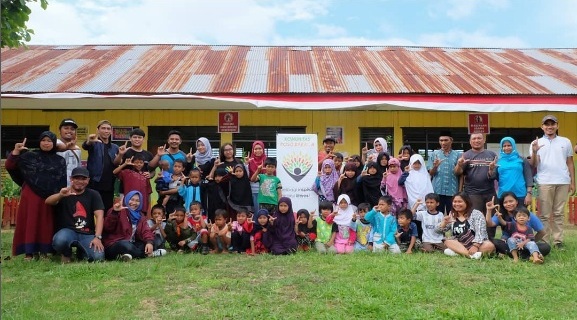
“Besides continuing our work through books, these three Poso BaBaca offshoots are now focusing more on developing children’s life skills in their respective regions,” explained Gunawan.
The goal is to help children in former conflict areas become stronger and prevent conflicts from happening again in the future. He gave a simple example through a “Tolerance Snakes and Ladders” game.
In this game, when someone lands on a square that represents a bad act related to ethnicity, religion, race, or social issues, there’s a negative consequence. From there, they discuss it together with the kids in a flexible and reflective way.
Gunawan affirms that the spirit of Poso BaBaca is now being carried forward through these three new communities. Reading activities still carry on, but they are now adding efforts to strengthen the life skills of young people. He believes that children in areas once affected by conflict must be equipped to face a challenging future. There are also special aspects that need attention, especially preventing the recurrence of conflict.
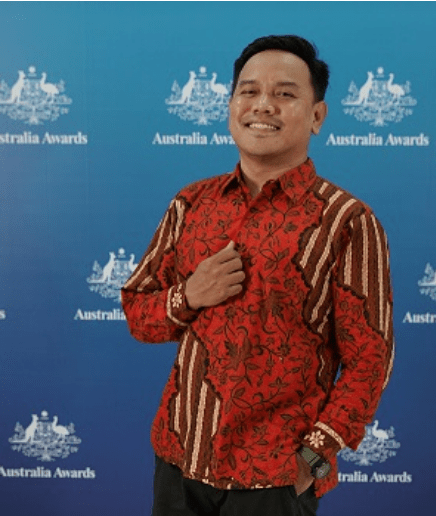
This awardee of Australia Awards Scholarship (AAS) views the impactful program differently, “We believe Poso is one of Indonesia’s barometers. If Poso is safe, then Indonesia is safe.”
Hope and appreciation
Running a community library in a rural, post-conflict area is never an easy task. Funding is scarce, infrastructure limited, and volunteers often juggle multiple roles. Yet, what keeps Poso BaBaca alive is its spirit of togetherness. The people of Poso have learned that peace is not an event. It’s a continuous practice—nurtured one page, one conversation, one act of kindness at a time.
For its incredible work, The Poso BaBaca community received the 9th SATU Indonesia Awards (SIA) for Central Sulawesi Province back in 2018 for their initiative titled “Literacy Movement in Post-Conflict Areas”.
The SATU Indonesia Awards is a prestigious appreciation presented by PT Astra International Tbk for young people. Aimed at both individuals and groups, the award goes to those who run programs in five key areas that bring positive impact to their communities. The areas include health, education, environment, entrepreneurship, and technology.
Today, the small library that began from a cardboard box and a few dusty shelves has grown into a regional symbol of resilience. The story of Poso BaBaca has inspired literacy movements across Central Sulawesi, proving that rebuilding doesn’t always start from political agreements. It can always start from the imagination of a child nurtured by caring people who employ literacy.
From pages to peace
As dusk falls, the children pack up their books, and the room grows quiet again. Outside, the hills of Poso glow in the fading light. The air is calm, carrying both the weight of the past and the promise of tomorrow. In this once-divided town, words have become medicine. Stories have turned into bridges.
Poso BaBaca continues to stand as living proof that literacy and peace are deeply intertwined. It is a solid testimony that reading can be a radical act of hope. So in every turned page, Poso is writing a new story—not about conflict or fear, but about understanding, compassion, and the quiet power of community.
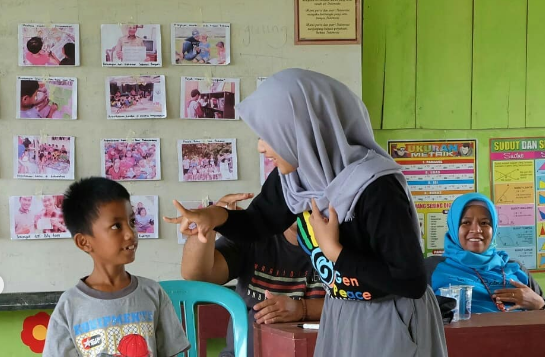
In many places, peace is discussed in conference halls or written into political agreements. But in Poso, it’s being read aloud by children on the floor of a small library. The story of Poso BaBaca reminds us that healing after conflict is not only about reconstruction. It’s about imagination. When people dare to tell new stories about themselves and each other, they begin to believe in a shared future again.
Literacy, in that sense, is more than education. It is an act of liberation. It allows a community once silenced by violence to find its voice again. With one book, one story, and one reader at a time—we’re optimistic about where this impactful act will lead. It’s not about economical benefit or short-term joy. Instead, Poso BaBaca has begun to build peace by healing a wounded land through stories and books.
 blog belalang cerewet