
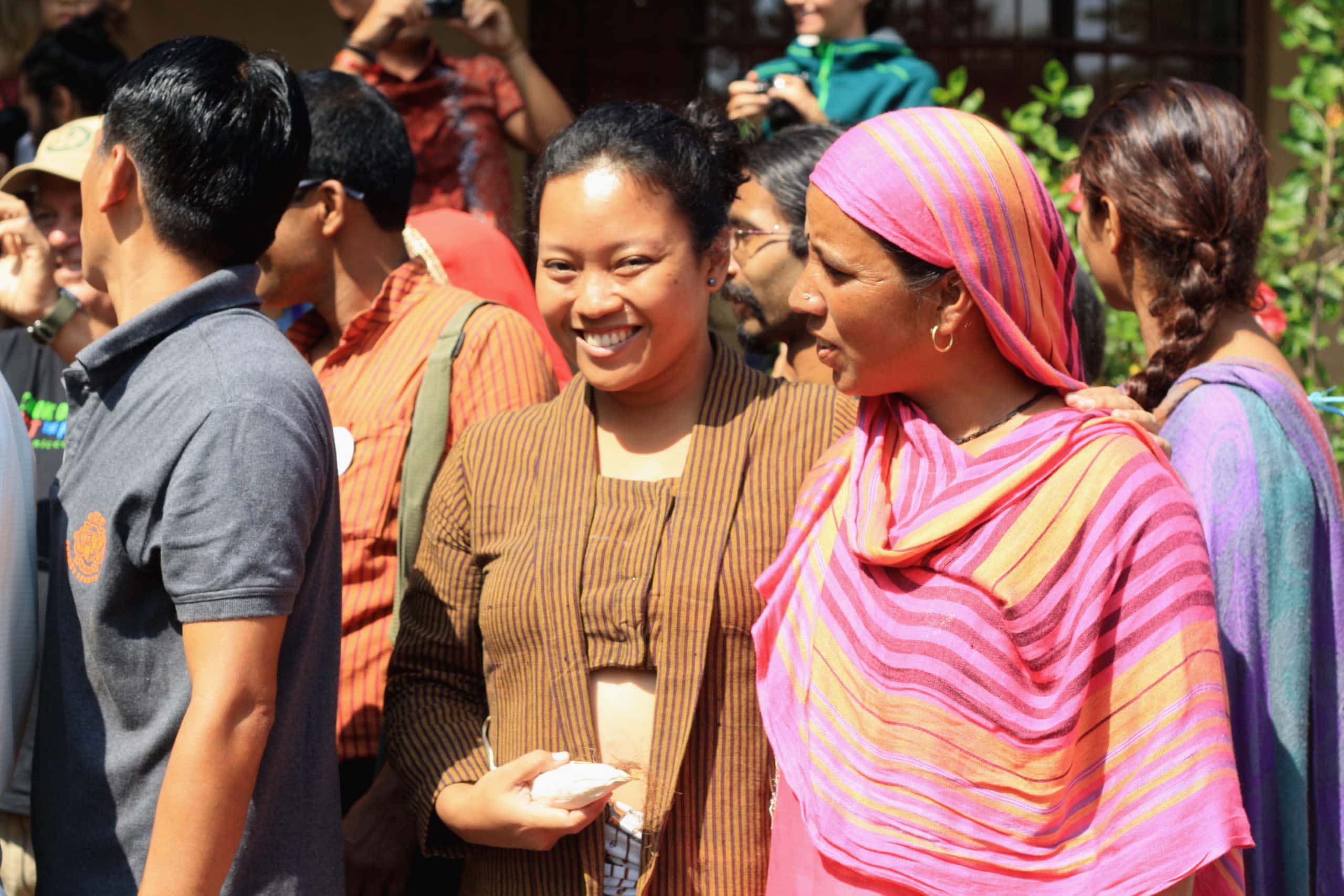
I couldn’t help feeling heartbroken when reading a piece of news reported by the Kompas Daily back in December 9, 2022. Isn’t it alarming that 68 percent or 183.7 million of Indonesians were reportedly unable to consume nutritious food? It is definitely ironic that many people do not have access to good food while they live in an agricultural country as rich as Indonesia. Instead of scarcity, there should be plenty of food we can produce while maintaining food security.
The media described that a food tragedy had occurred in Merauke, for instance. The town is expected to be a food barn in eastern Indonesia. Quite the opposite, Merauke is actually one of the most food insecure areas in Indonesia with a low life expectancy.
This incident was partly due to a change in the lifestyle of local residents. The forest was originally used as a source of local food for indigenous Papuans. They have depended greatly on natural forest products without having to always purchase other food commodities.
A dramatic change occurred in 2010 when approximately 1.2 million hectares of land and forest in Merauke Regency, West Papua, were converted into agro-industrial areas. The local population was directed to consume rice but without a cultural transformation of rice farming. As a result, the project to create new rice fields was a disappointing failure.
The food barn project in Merauke has failed following the abandonment of most of the newly created rice fields. Not only is the land unsuitable for rice cultivation, lack of infrastructure support and the absence of qualified farmers have also exacerbated the problem.
Endangering food independence
In addition to food insecurity, another consequence of this policy is the potential loss of cultural identity, knowledge and skills of local communities regarding food and health that they have lived with and preserved for generations.

The food barn design automatically changes the consumption patterns of the local population so that nutrition and health problems are inevitable. Local people have enjoyed forest products such as sago and tubers from generation to generation. It is now a problem when indigenous Papuans are forced to buy food from outside the village including rice and instant noodles.
Food independence is now at stake. If we look at the history, President Soekarno once reminded that Indonesia could not just rely on rice fields. This remark was made when he attended the groundbreaking of the Bogor Agricultural Institute in April 1952.
Unfortunately, up to 70 years later, food security has apparently not been possible by empowering local foods such as corn, sorghum, taro, konjac, and various wild plants which are actually productive to support a sustainable consumption system.
Inspired by mangroves Papuans consume
The fact that local food resources have not yet been optimally utilized is what makes Hayu Dyah Patria very concerned. Born in Gresik, East Java, she has a preference for utilizing wild edible plants to provide nutritional content virtually free of charge.
“At the moment our food system is built on monoculture. Forests were converted into rice fields and palm oil plantations. People are forced to eat rice which results in malnutrition often afflicting children and women, like that in Papua. There hasn’t been any appreciation of local food culture. As a result, both our health and the health of the environment are in great peril.”
Majoring in Food Technology and Nutrition, this graduate of Widya Mandala Catholic University Surabaya has apparently shown great interest in the relationship between nature, humans and food.

Her penchant for those three topics had prompted her to research many references to reveal how they are interconnected. While doing research for thesis writing, she discovered an interesting fact. From the literature she read, it’s clear that indigenous people in Papua who live in coastal areas have apparently employed various types of mangroves as food.
One type of mangrove used by the local community is Bruguiera gymnorrhiza also known as lindur. Residents usually make starch from its seeds. This discovery did encourage her as she was often passing several areas filled with mangroves on her way to campus every day.
Hayu claimed to be a bit dissatisfied with what she learned at college. The knowledge tended to be fragmented, rather than holistic. At the same time, she grew extremely fond of reading many anthropology books as well as enjoyed studying various cultures from different parts of the world.
Armed with food and nutrition knowledge, she began to investigate how the science of food technology and nutrition is linked to anthropology. She then collected literature and publications that discuss the intersection of anthropology with food and nutrition science.
Less commercial, rejected
Her findings indicate that local food may serve as a source of nutrition that can be obtained easily and cheaply. However, when submitted for her thesis discussion, the idea was met with rejection. The food industry would find it hard to commercialize. After defending her reasons, she was finally allowed to write on that topic but ended up getting a poor grade.
Despite the result, she was not regretful. Instead, she felt much fulfilled because she had learned a lot about mangroves and their relationship with humans. Her thoughts are indeed unique because she was not interested in becoming a graduate who produces ultra-processed food or working in a food factory as expected by the faculty.

As soon as earning her bachelor’s degree, she became even increasingly curious about the biodiversity in Indonesia. This curiosity led her to visit villages to learn more about local food culture. Her direct interaction with villagers revealed a problem she had never known about, something she had never heard of when studying, i.e. nutritional issue in the society.
The irony of a rich country
Hayu is concerned about capturing this phenomenon because it is common knowledge that Indonesia is a very rich country in biodiversity, and is even said to be one of the countries with mega-biodiversity in the world. Unfortunately, malnutrition and hunger have remained big problems in the archipelago. It is this irony that encouraged Hayu to study the food system in Indonesia more intensely.
She uses the research on wild food plants as an effective entrance to do so. She firmly believes that Indonesian society in fact used to have a very close relationship with nature and utilized everything provided by nature to meet their needs, including food. She was also inspired by the habit of foraging (meramban in Javanese and ngalasan in Sundanese) which has existed in Indonesian culture for a long time.

According to Hayu, indigenous people in Indonesia still carry out this habit. However, this natural lifestyle is slowly eroded due to the influence of lifestyle in the globalization era. She emphasized that what she was doing was an effort to explore traditional knowledge about foraging practice in various cultures throughout Indonesia.
Together with Mantasa, a foundation she initiated in 2009, she has been dedicated to reviving the foraging lifestyle as a strategy to fight malnutrition and hunger in Indonesia. Before Mantasa existed, however, Hayu had actually been exploring and campaigning for local food wealth since 2005.
Obtaining nutrition from wild edible plants
Her experience with a number of NGOs working on education and agricultural issues has clearly contributed to Mantasa’s solidity and commitment to finding food solutions from wild edible plants. Her exploration of gender issues and how they are related to food has made her venture even more intriguing — especially coupled with her knowledge of food technology.

Mantasa is currently assisting various communities in many areas other than Galengdowo, a village in Jombang, East Java where she lives and initially started the project. Hayu also carries out activities in Ngadas with the Tengger indigenous community, Pelanjau with the Dayak Kanayatn indigenous community, Mukusaki (Flores), Manokwari, and Alor Island.
To support its activities, Mantasa collaborates directly with local residents and indigenous communities, as well as works in conjunction with various non-governmental institutions both home and abroad. Hayu fully realizes that collaboration and synergy are the keys to driving Indonesia out of malnutrition problem.
As a simple tool to preserve local food while strengthening food security and fighting malnutrition using sensible methods, wild edible plants that Hayu promotes are but a smart solution. These wild plants can grow almost anywhere without expensive care during cultivation.
She assured that increasing people’s nutritional intake can be done simply by looking around, in our own yard or garden — the way our ancestors had adopted the foraging habit.
Say poinsettia leaves (Euphorbia pulcherrima), which have abundant mineral content. Not only can this plant be used as a natural laxative but also to stimulate breast milk. In addition to wrapping a traditional cuisine, local people usually use this plant to help normalize the menstrual cycle, treat burns, overcome swelling, and stop bleeding.

Then there are purslane leaves, which have long been considered the cricket feed. Based on a research, it is revealed that purslane contains many vitamins and intelligence-boosting compounds.
“Purslane does contain Omega-3 fatty acids which are good for the heart and brain,” said Hayu in an interview with Radio Idola Semarang.
More to the point, it is very practical to consume it. You can cook it as a healthy vegetable soup. Alternatively, you can eat it raw as a salad without having to cook it so that you save energy. Omega-3 fatty acids are usually found in sea fish such as tuna and salmon. Due to their high price, tuna and salmon are not an option. This way purslane is a wise choice if you want to make your child brainy.
Purslane is worth looking at because this plant is truly wild; easy to find anywhere because it grows in sandy areas, clay soil, and can even live in land where water is scarce. To make it more amazing, purslane is remarkably adaptable to the environment.
Challenges and obstacles
When asked what obstacles she’s faced while managing Mantasa, Hayu said that the main challenge was the community’s perspective regarding their own food culture which was increasingly declining. It takes time and hard work to change their erroneous mindset. They have so far tended to believe that their food culture is nothing but outdated. That’s what must be changed; they need to be aware that the local food they have is healthy, sustainable, and of good quality (in terms of nutrition).
When Mantasa went to the villages, the local people immediately responded awkwardly to the research being carried out. They considered their local food terrible and of poor quality. What saddens us the most is that local food is often referred to as “poor people’s food” so that research on this matter would be considered strange.
“Another obstacle is the lack of funds to carry out this kind of research because currently a lot of research in the food sector is focused on commodity crops. On the other hand, wild edible plants are not considered commodities that offer high economic value. The truth is it actually has other precious values, including high nutritional content, cultural value, ecological value, and so on.”
Hayu further pointed out that the role of women should be highlighted and made more visible every time we talk about food and agriculture. It is an undeniable fact that women have played a very important role in our food system, throughout the entire food chain of ours. From seeds to food served on the dining table, there are women’s hands in every stage.

I remembered my mother’s complaint during last year’s planting season. In our village, when the planting season arrives, there is a shortage of agricultural laborers to plant rice. As is understood, tandur, namely planting rice by walking backwards, requires special skills and so far has only been mastered by women. This proves that women’s productivity underlies all primary human needs, especially in the context of food.
That is why Hayu and Mantasa have continued to provide assistance to the community through various activities, especially empowerment for women. The activities include nutrition education for village women, healthy food processing, food processing experiments using wild edible plants, and training on permaculture/regenerative agriculture.
Future aspirations
According to UNICEF, Indonesia is still ranked 5th in the world in terms of the number of children experiencing malnutrition. This should not happen if we wisely utilize local food as a source of adequate nutrition. Sufficient food and nutrition as a child’s basic right can be fulfilled without having to always rely on consuming expensive food.
In the meantime, we all need to reflect on the data recorded in Cianjur from January to September 2021. There are at least 86 cases of malnutrition recorded and three of them under five died due to undernourishment. Head of the Family Health and Nutrition Section of the Cianjur Health Office, Rina Yudiantini, said that although there was a downward trend, cases are still high.
This has happened possibly because we haven’t shown any appreciation of the local food culture that has existed and preserved for generations. Not only has this ignorance led to the loss of human life, but also endangerment of environmental sustainability and the survival of other creatures.
Quoting Vandana Shiva, Hayu believes that “diversity creates harmony and harmony creates beauty, balance, bounty and peace in nature and society, in agriculture and culture, in science and in politics.” It can be inferred that prosperity and tranquility occur only when we can appreciate the diversity we live in.
A great admirer of Jane Goodall, Hayu also wants us to understand the paramount importance of biodiversity in our survival in the universe, not solely as users or engineers, but in the context of our coexistence with other creatures.
Although Mantasa has so far succeeded in documenting at least 400 wild edible plants, Hayu aspires to create a directory containing wild edible plants and their uses in various regions across the archipelago. In addition, she also wants to carry out an analysis of the nutritional value of wild edible plants to prove that these plants have the potential to overcome malnutrition problem that still haunts this country.

As far I’m concerned, Hayu Dyah Patria’s work with Mantasa is not only an example of ecofeminism, but also embodies great spirit and dedication with which she appears to be a biodiversity leader in the society, especially East Java, to influence and spread benefits that we can realize and understand how food, environmental issues and the roles of women are interrelated.
It is fitting that Hayu’s contribution made PT Astra International, Tbk award her with the prestigious SATU Indonesia Awards 2011 in technology as a figure who empowers nutrition from wild edible plants. The simplicity and the value offered are truly inspiring. It is easy to apply and generates great impact.
What Hayu has done makes us realize and aware that a very rich country like Indonesia—with various types of wild edible plants—should not have a population suffering from malnutrition, let alone hunger. Traditional knowledge that has been practiced by our ancestors should be immediately collected and documented to serve as the key to food sustainability for greater use without waiting for their extinction.
Sources:
- An interview with Hayu Dyah Patria
- https://www.kompas.id/baca/investigasi/2022/12/09/pangan-lokal-solusi-gizi-seimbang
- https://www.kompas.id/baca/investigasi/2022/12/08/lebih-separuh-penduduk-tak-mampu-makan-bergizi
- https://womensearthalliance.org/hayu-dyah-patria/
- https://news.detik.com/berita-jawa-barat/d-5808618/tiga-anak-gizi-buruk-di-cianjur-meninggal
 blog belalang cerewet